Checking for Physical Damages during RMA
Finding Physical Damage
It is critical to ensure products being returned under warranty are free from Physical damages. For most products the damages are pretty obvious but it helps to know what to look for.
General guidelines
- Deformities, bends and uneven surfaces
- Items not belonging to vendor
- Signs of item being dropped
- Signs of water or burns
- Scratches, especially on circuit boards
- Missing key parts
Graphics Cards
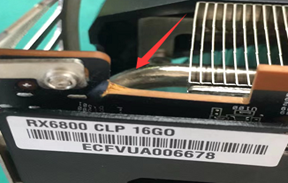
Circuit board / PCB damage
The most critical part of a GPU that ensures it works properly is the PCB; the little green or black circuit board that is sandwiched between the heatsink/fans and the backplate.
Always look for any bending, scratches or scraping on the PCB. A bend PCB usually means that the GPU was dropped or damaged in shipping.
Gold finger damages
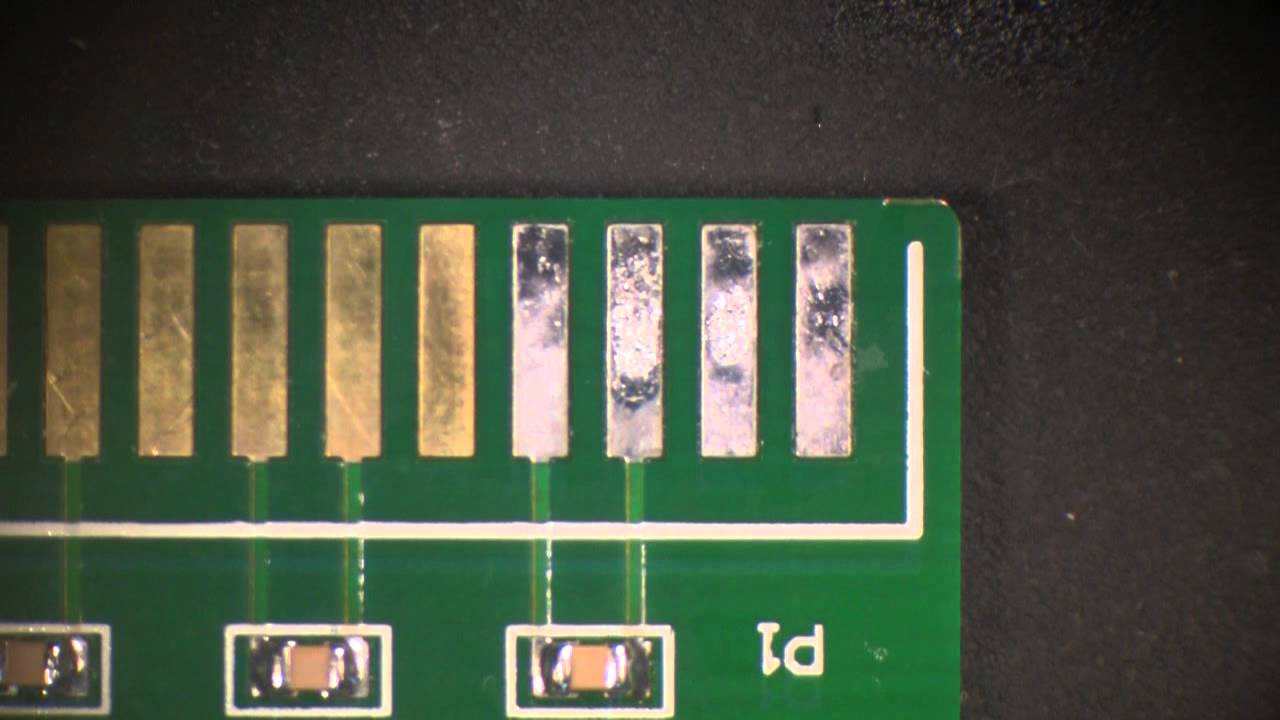
Damages on interface gold fingers on the PCB are also hard to notice.
Other reasons
Any scratches on the GPU, missing or peeled off thermal pads, broken or bent power cables etc...
Storage Devices
Hard disk drives are easily damaged if opened or dropped.
Any signs of damage due to heavy impact can be reason for rejected. Always check for deformities on the metal plate
Scratches on PCB
Even minor scratches to the exposed PCB can be reason for rejection.
Sometimes the interface or ports of the HDD can be deformed, which will result in a rejection.
Other reasons (See Attachement)
Tampering with screws, missing labels, unreadable barcode, broken ports, signs of water etc.. can also be reasons for rejection
More pictures and details in the attachment
CPUs
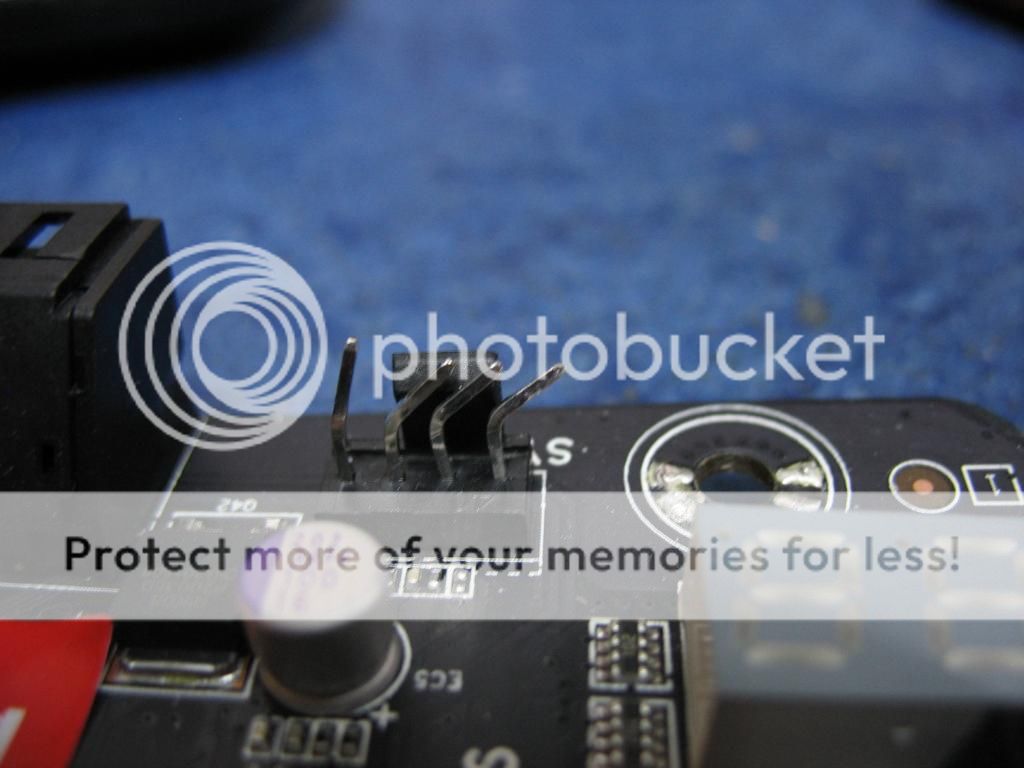
Bent Pins
Although bent pins can usually be repaired, CPUs like this are rejected as it is an obvious sign of physical damage.
Modern CPUs have Land Grid arrays which means that the pins will be on the motherboard socket instead. CPU RMAs can also be rejected if there is any scratches on the bottom/gold part of the CPU.
Missing Cooler
If the CPU came with a stock cooler this must be returned when claiming an RMA.
Look for missing CPU socket cover, bent pins and presence of thermal paste in the socket.
ALWAYS USE YOUR BEST JUDGEMENT
Related Articles
Before Claiming an RMA from MBUZZ
We believe after sales support is what makes MBUZZ stand out from other distributors. If something goes wrong with any number of items you bought from us, don't hesitate to contact us at support@mbuzztech.com Pre-RMA Submission Checks Here are a few ...
Information required for process RMA claim for processors.
Information to be Submitted Serial number (ATPO) - See Image Batch number (FPO) - Optional - See Image Invoice copy Clear picture of processor with SN and Batch number Fill the RMA Form with the following details Device Model number Device Serial ...
RMA Refund for eCommerce Customers
eCommerce customer can request RMA claim after 30days of purchase date. Define the Refund Policy Eligibility criteria should cross 30days from the date of online invoice. Should have a valid reasons for the refund. Proof of Purchase & RMA form to be ...
e-Commerce Customer RMA Claim Process
RMA Claims from e-commerce customers Customers who are purchasing from e-commerce site like Amazon, with MBUZZ are end users. They don't have any direct account or contact with MBUZZ so we can't do our general RMA process with them. Customers from ...
RMA FAQ
RMA FAQ What is RMA? Answer: RMA ( Return Merchandise Authorization) is a process that allows customers to return defective or faulty products for repair, replacement or refund as per warranty terms. When should I request RMA? Answer: You should ...
Recent Articles
Troubleshooting NVSM Alert NV-CPU-XX – Unrecoverable CPU Internal Error
Purpose This document provides a general troubleshooting procedure for the NVIDIA System Management (NVSM) alert NV-CPU-XX, which indicates that a CPU has reported an internal error. The article outlines how to verify whether the alert represents an ...
PCIe Gen5 Switch Board Replacement
1. Objective The objective of this Method of Procedure (MOP) is to safely replace the defective PCIe Gen5 Switch Board in the Supermicro server while minimizing system downtime and ensuring all PCIe devices, including GPUs, NICs, NVMe drives, and ...
Local Boot Support for DGX H200 with BCM 11
Overview This Knowledge Base (KB) article explains the supported method for deploying and managing a DGX H200 system using Bright Cluster Manager (BCM) 11 while booting the operating system from the node's local NVMe storage. To be managed by BCM, ...
Execution of NVIDIA Field Diagnostic (FD) Tool and Collection of Diagnostic Logs, and troubleshooting of GPU(s) not detected
1. Objective To provide a standardized procedure for executing the NVIDIA Field Diagnostic (FD) tool, verifying GPU status, collecting the required diagnostic logs, and documenting the findings for further analysis. 2. Scope This procedure applies to ...
Fiber Optic Bend Radius Measurement and Compliance
1. Purpose This article outlines the procedure for verifying that installed fiber optic cables comply with minimum bend radius requirements. Proper verification prevents signal degradation, ensures optimal optical performance, and protects the ...
Popular Articles
CP Plus Camera and NVR Configuration
NVR Configuration The CP Plus Pro Series of NVRs have been meticulously designed for providing you with upgraded performance and higher recording quality in your IP video surveillance solution. The robust processor that has been inculcated in this ...
Kerberos Authentication – Overview
What is Kerberos? Kerberos is a secure authentication method used in our Active Directory (AD) environment (mbuzztech.com). It allows users to: Access multiple systems without re-entering passwords (Single Sign-On – SSO) Log in once Where We Use It ...
How to Remove and Reinstall NVIDIA Drivers on Ubuntu
This article provides step by step guide to completely remove existing NVIDIA drivers and reinstall specific version of the NVIDIA driver on the Ubuntu system Prerequisites Administrative (sudo) access to the Ubuntu system. Internet access to ...
Personal Computers and Servers - Classification and Point of Contact
We can classify the computers that MBUZZ handles based on their form-factor as below: Tower Workstations, Desktops, Gaming PCs and SFF (Small form factor) PCs fall under this category. These are computers people would use on a desk and rarely move. ...
M.2 SSD Tier List
The sequential read and write speeds, which are usually the most advertised number, are not a proper benchmark of real-world performance or the quality of an SSD. This article categorizes and tiers SSDs based on factors like the type of NAND flash, ...